“It’s not what you say; it’s how you say it.” If it’s true for language, then it’s especially true for bass players.
Sometimes, “saying” the right thing in a musical setting comes down to nailing the tone at the source. And whether your music calls for the smooth pulse of a club combo or the savage snarl of a tube stack, getting the right tone starts with your bass amp.
If you’re searching for the best way to stretch your bass-playing dollars, then the following list will help you get the best bass amp for your needs. From travel bass combos and pedalboard bass preamps to head-and-cab stacks, these bass amps cater to bass players of any need and budget.
Best Bass Amp Heads
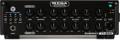
Mesa/Boogie Subway TT-800 Lightweight 800-watt Bass Head
Don’t let the size fool you, the Mesa/Boogie Subway TT-800 Lightweight 800-watt bass head packs a punch! Coming in at seven pounds, this bass amp can easily be carried from gig to gig without throwing your back out. As far as tone, the Subway TT-800 delivers a warm, thumpy, and versatile sound that harkens back to the original Bass 400. By refining the amp and blending it with Mesa’s beloved Subway preamp and Class D output section, the TT-800 offers great tones in the bedroom and on the stage. If you are looking for a modern Mesa/Boogie bass amp that is as versatile as any other amp on the market, then you’ll want to check out the Mesa/Boogie Subway TT-800 Lightweight 800-watt bass head!
Peavey MiniMAX V2 600-watt Lightweight Bass Head
Peavey’s potent little bass brute
At six pounds and packing a hefty 600 watts, the Peavey MiniMAX V2 lightweight bass head wins the votes for most output per pound. This little head is perfect for the bass player who wants to travel light while carrying a big stick. Peavey’s TransTube gain section packs on tube-emulated saturation for times when your punk gallop needs a little giddyup. In addition to its 3-band EQ, the boost, punch, and bright switches will help pizzicato-ers to slappers find their desired tone. Additional features we like in the MiniMAX V2? DDT speaker protection kicks in above a certain threshold to protect your speakers from square-wave clipping. And don’t forget about the Kosmos harmonic enhancement, which helps define low notes when played through smaller speakers.
Orange Terror Bass 500-watt Bass Head
Class D cleans but tube where it counts
The all-tube Orange AD200 forged the tones that defined rock bass as we know it — think Geddy Lee, Glenn Hughes, and countless others in the ’70s and onward. It also weighed as much as a full-grown husky. The 10-1/4-pound Orange Terror Bass 500-watt bass head brings the growl and punch of this tube icon to a modern hybrid design that’s much friendlier to haul around town. Its front end is fueled by a 12AX7 preamp tube and familiar 3-band EQ. However, its 500-watt power section utilizes highly efficient, solid-state Class D topology. This means that you get the creamy Orange warmth and throaty drive of its predecessor at a level that’s easier to scale and at a size that’s easier to schlep. Other welcome features in the Terror Bass include a tube-buffered effects loop (like the ones found in favorite tube classics) and a post-EQ XLR output for injecting tones directly into a PA or audio interface.
Fender Bassman 800HD 800-watt Hybrid Bass Head
Black Panel vibes in an ultra-light carry
What bassist doesn’t get weak in the knees after seeing a Fender Black Panel Bassman perched atop a full stack? Today’s Fender Bassman 800HD 800-watt hybrid bass head re-creates the experience of terrorizing a stage with one of those hernia-inducing heavyweights — all at a comfortable 17 pounds. How? By fusing a highly efficient Class D power amp with a dual-tube preamp stage to bridge the past with the present. Two voicings — vintage and overdrive — help you carve out space in a mix with wide swaths. What’s more, a sweepable midrange gives the modern Bassman 800HD versatility that no ’60s article could match. When you factor in modern speakON combo connectors, a generous helping of inputs and outputs, and a switchable pre-/post-EQ XLR output for silent recording, this Bassman is sure to make modern Fender players giddy.
Ampeg Heritage 50th Anniversary SVT 300-watt Tube Bass Head
The amp, the myth, the legend
No bass amp on the planet has been more imitated (often unsuccessfully) than the classic Ampeg SVT. At 85 pounds of glass, iron, and steel, the all-tube Ampeg Heritage 50thAnniversary SVT 300-watt tube bass head stands as an SVT lover’s dream. On the front panel, you’ll find channels for ’69 Blueline and ’75 Blackline variations of this icon, which can be enjoyed separately or jumpered together for the ultimate SVT experience. Whatever your flavor, you can be sure the SVT Heritage will deliver the goods in a live setting. Its 6-tube power section delivers a pants-flapping 300 watts RMS that’ll get the speakers moving in your 8×10-inch stage cab (not included). Take it from Sweetwater: when it comes to no-compromises SVT tone, the American-made Ampeg Heritage 50th Anniversary SVT head is about as close to perfection as it gets.
Best Bass Amp Combos
Orange Crush Bass 50 1×12-inch 50-watt Bass Combo Amp
A killer practice and recording!
It’s no surprise the Orange Crush Bass 50 1×12-inch bass combo amp is many players’ first and last practice amp. This mighty 50-watter has what you need to handle everything from tracking sessions to greenroom warmups, all while delivering that classic Orange style and flavor that bassists can’t get enough of. Tuner, overdrive, 3-band EQ with mid-frequency sweep, aux input for jamming to backing tracks . . . What more could you ask for in a practice combo? While the Crush Bass 50 isn’t something we’d consider to be a club amp, we have heard stories of our customers using the amp for light stage monitoring while sending a pre-EQ’d signal to FOH using the onboard cab-emulated headphone output.
BOSS Katana-110 Bass 1×10-inch 60-watt Combo Amp
Unshackle your bass creativity
We bassists sometimes are overlooked when it comes to effects. But chorus, delay, reverb, fuzz, and envelope filters can really enhance a part in a mix. That’s why we’re excited to see BOSS bring its Katana line of amp modelers to the bass world. The Katana-110 Bass 1×10-inch 60-watt combo amp gives you three preamp types to cover vintage to modern tones and more onboard effects than you will believe. Need a starting point for a particular song section? The BOSS Tone Studio desktop/mobile app gives you plenty of artist presets — any, of which, can be saved to the Katana-110 Bass’s six onboard user presets for instant gratification. Endless I/O will ensure that this amp earns a permanent spot in your home and touring rigs. Meanwhile, a blend control makes the Katana-110 Bass’s impact as subtle or pronounced as you need.
Fender Rumble 500 2×10-inch 500-watt Bass Combo Amp
You won’t believe the sound from this thing!
If you could feel the Fender Rumble 500 2×10-inch 500-watt bass combo amp in your hands, then you might think you were handling a practice amp. But nothing could be further from the truth. This featherweight firebreather is built for the stage. The Rumble 500’s two 10-inch Eminence drivers churn out a sternum-crushing 250 watts of continuous output (upgradeable to 500 with an unincluded extension cab). And not only is this combo wickedly loud, but it’s also versatile enough to flatter any instrument in your arsenal and any song in your repertoire. Contour and vintage voicings help shape your midrange, while a high-quality onboard overdrive adds hair and thickness to any pocket. Factor in a 4-band EQ and bright switch, and the Rumble 500 is a born performer through and through. Plus, onboard effects loop and aux in/headphone out abilities sweeten the package.
Ampeg Rocket Bass RB-210 2×10-inch 500-watt Bass Combo Amp
Legacy ’60s look in a compact rocker
Leave it to Ampeg to create a combo that’s as tough as nails and looks like a dancehall dime. Beneath a black diamond wrap and signature sparkle grille cloth lies the Ampeg Rocket Bass RB-210 2×10-inch 500-watt bass combo amp — and it’s all business. This combo gives you 250 watts of continuous output through its twin 10-inch drivers, and the wattage can be doubled when you connect an extension cab (sold separately). Though there’s a ton of clean headroom on tap, this combo’s calling card has to be Ampeg’s SGT (Super Grit Technology) overdrive. Think of it as an enhanced version of the Scrambler Overdrive found on older Ampeg pedals and amps. It’s great for piling on bite and sustain without resorting to external pedals. Other useful features on the RB-210 include a passive/active pickup pad switch, I/O to spare, and Ultra Hi/Ultra Lo switches borrowed from Ampeg’s legendary SVT heads.
Gallien-Krueger MB112-II 1×12-inch 200-watt Bass Combo Amp
Power and features to cover 80% of your gigs
Light and loud, the Gallien-Krueger MB112-II 1×12-inch 200-watt bass combo amp has the power and features to help you shine in most gigging situations. In addition to its 200 watts of clean, even headroom, you get a powerful 4-band active EQ — aided by a contour switch — to make short work of tonal shortcomings in your room or instrument. But is that it? Yes — in the same way as a Porsche is just a way to get from point A to point B. The MB112-II is so elegant in its simplicity that it’s easy to overlook just how luxurious gigging with this little practice combo can be. For gigs where you need a little extra muscle, double your horsepower with the amp’s chain output. This feature connects the MB112-II to a GK MBP-powered extension cab to dramatically improve your output.
Best Bass Preamps
Tech 21 SansAmp Bass Driver DI V2 Pedal
The once and future DI king
Before the ’90s, bassists had two options. They could either haul a heavy amp to the gig and send their preamplified signal to FOH, or they could run a dry bass into a DI and suffer a bland, innocuous tone. Enter New York amp manufacturer Tech 21. Its SansAmp Bass Driver DI V2 pedal proved that players could get solid gold tone live or in the studio without breaking their backs. The Bass Driver has seen several iterations since the original, but we’re pleased to say that the little black-and-gold is better than ever in today’s V2. Is it convenient? Yes. Does it sound like an amp? Yes, and with one of the richest overdrives we’ve heard. More importantly, it eliminates the need for an amp. Unless you’re the type of player who needs to feel the roar of a cab onstage or in the live room next door (which, yes, has its perks), the SansAmp lives up to its name. Additionally, it makes a great gigging failsafe because of its battery-powered capability and can even frontload your existing amp for added tone tweaking.
Two Notes ReVolt Bass Tube Bass Simulator Pedal
Three distinct tube bass tones on tap
Modeling and solid-state preamps have done a great job of emulating tube warmth, punch, and sparkle. Even so, many bassists still have a soft spot for glowing glass and big iron. The Two Notes ReVolt Bass tube bass simulator pedal supplies three, independent, tube-kissed voicings that are powered by a real high-voltage 12AX7 preamp tube inside. No starved plates here. A step-up transformer runs the internal tube at a healthy 200 volts for authentic squash, sag, and saturation. The ReVolt Bass also comes with the Series-B DynIR Cabinets Collection, which means that you can output your tone direct into a PA or recording medium using cab IRs of some coveted classic bass cabs. The ReVolt Bass has the bones to shape your tone on its own. But it also integrates seamlessly with your current rig. An effects loop, amplifier in/out, XLR DI, and even a special 4-cable method switch make this preamp a balanced part of any bass rig, stage, or studio.
Darkglass Microtubes B7K Ultra V2 Bass Preamp Pedal with Aux In
A modern take on a classic circuit
Darkglass’s preamp pedals have been putting new spins on classic bass tones for the better part of a decade. Its overdrive flavors built a new empire of tight, grindy bass textures that previous preamps couldn’t muster. We like the Darkglass Microtubes B7K Ultra V2 bass preamp pedal with aux in because it narrows the gaps between vintage and modern. Indeed, this preamp gives you a taste of everything that Darkglass offers. Channel 1 paints with an impressive palette of textures, courtesy of a 4-band active EQ and two dedicated midrange toggles. Channel 2 builds on your bass tone like Jackson Pollock with a baster brush. Kick on the independent distortion for all the gain you need to handle modern forms of music. The real fun starts when you roll in the parallel blend knob to regain shades of your core tone. The results range from hint-of-dirt-punk tones to a filthy metallic clank in seconds. Any way you slice it, the Microtubes B7K Ultra V2 is a good time for players looking for something extra from their beloved classics. And because the B7K Ultra integrates so well with stage amps and studio outboards, it’s guaranteed a spot on your board or desktop.
Origin Effects Bassrig Super Vintage Bass Preamp Pedal
A pedal steeped in Super Vintage Tone
The Origin Effects Bassrig Super Vintage bass preamp pedal makes no bones about its heritage. The name, the panel colors — this preamp is classic SVT amp topology miniaturized. You won’t find a stitch of modeling in the Bassrig Super Vintage. All sounds are reproduced entirely in the analog domain, including the cab-emulated DI output. This gives the Super Vintage a fast, dynamic response in the hands, which approximates that high-watt SVT tone (considering the price and size). Choose Ultra Hi or Lo Cut voicings, bump up the drive, carve out your EQ settings, and in seconds, you’ve got a great bass tone for the stage and studio. Bass-centric features, including a dedicated Amp Out EQ section for rolling off excess mud or hiss before it hits your amp, make the Bassrig Super Vintage a powerful tool for any SVT lover. It also has a blend control to regain some of the dynamics of your unprocessed signal.
Best Bass Amp Cabinets
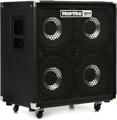
Hartke HyDrive HD410 1,000-watt 4×10-inch Bass Cabinet
A 4×10-inch tailored for today’s bassist
Clean fundamentals and commanding projection. These two qualities define the Hartke HyDrive HD410 1,000-watt 4×10-inch bass cabinet. How, you ask? It starts with a quartet of two-piece composite speakers, which combine straight anodized aluminum inner cones with Kevlar-loaded paper outer cones. Pair this with a carefully tuned sealed cab, and the HyDrive HD410 keeps rhythms focused and roots grounded — even to listeners up in the mezzanine. Of course, with 1,000 watts of power handling, this cab is well-suited for outdoor arenas and sold-out amphitheaters. And don’t forget about the weight. Sure, 63 pounds is nothing to sneeze at, but that’s peanuts compared to the level of performance you get from a single-stage cab.
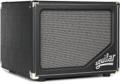
Aguilar SL 112 1×12-inch 250-watt Bass Cabinet
Big bass in a small package
For gigs where a 4×10-inch would be overkill, there’s the Aguilar SL 112 1×12-inch 250-watt bass cabinet. A punchy 12-inch woofer and satiny phenolic tweeter reside in a stylish, all-wood cab and give the SL 112 the strength and clarity to hang with a rock band — all at a comfortable 25 pounds. The woofer features a neodymium magnet to further minimize weight. Visually, the SL 112 is a knockout. Its classic white piping and paged-turned front baffle will ensure all eyes are on you by the second number. Stack something like the Aguilar Tone Hammer 500 superlight head or 700 superlight head on top, and you’ve got a recipe for impeccable tone for a weekend gigger.
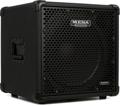
Mesa/Boogie Subway Bass Cabinet 400-watt 1×15-inch 8 Ohms
Pound for pound, Mesa’s biggest-sounding cab!
The Mesa/Boogie Subway bass cabinet 400-watt 1×15-inch 8 Ohms could be one of the finest-sounding Mesa bass cabs to date — never mind that it’s also one of the smallest! This cab has been specially tuned for the Mesa/Boogie Subway D-800 lightweight 800-watt bass head to create massive tone from a minuscule package. Bassists at Sweetwater got the official scoop on these Mesa cabs and let us tell you: to behold the inside of one of these cabs is like looking at modern architecture. Meticulously CNC’d Italian poplar with countersunk baffles and a bass-boosting Tri-port depict Mesa’s attention to maximizing every ounce of tone in mini cabs. But does that make it a lightweight? Not a chance! Rugged, spring-loaded side handles and a tough steel grille help keep this cab safe and sound session after session.
Ampeg Heritage SVT-410HLF 4×10-inch 500-watt Bass Cab with Horn
A transformative playing experience
Bass players at Sweetwater love our 8×10-inches. But even we would be the first to admit that, in many cases, a 4×10-inch would do just fine. The goal of the Ampeg Heritage SVT-410HLF 4×10-inch 500-watt bass cab with horn is to mimic the experience of playing a towering 8×10-inch stage rig in a more modestly sized 4×10-inch enclosure. No, it’s not light by any stretch of the imagination. But compared to the chest-high Ampeg Heritage SVT-810E 8×10-inch 800-watt bass cabinet, it’s downright breezy. As you may have guessed, this cabinet is one of several cabs voiced to shine a spotlight on the SVT head’s thunderous power and dulce de leche sustain. And for fans of vintage SVT cab visuals, the STV-410HLF’s rollback enclosure, inset handles, and black sparkle grille cloth won’t disappoint.
Gallien-Krueger NEO IV 4×10-inch 1,000-watt 4-ohm Bass Cabinet with Steel Grille and 1-inch Tweeter
Get the most out of your GK Legacy or Fusion amp
This GK NEO IV 4×10-inch 1,000-watt 4-ohm bass cabinet with steel grille and 1-inch tweeter is bright, tight, punchy, and full — everything we’d want in a 4×10-inch. So, imagine our surprise when we learned that this lightweight comes loaded with neodymium speakers mounted inside a lightweight plywood shell! These rare earth magnets move some air in the NEO IV’s 10-inch GK custom-designed loudspeakers, even by traditional ceramic standards. Each USA-made driver features a voice coil made with edge-wound aluminum ribbon and sits in a die-cast frame to maximize efficiency. Onboard speaker protection limits square-wave distortion to keep your cab running strong. Craving big bass even where space is at a premium? Try pairing this cab with a Gallien-Krueger Legacy or Fusion amp head for a tone-match made in heaven.
Best Bass Amps Buying Advice
How to Choose a Bass Amp
Looking to get the most out of your bass amp–buying dollars? This bass amp buying guide includes information to help you choose a bass guitar amplifier for your needs. Since there’s so much to consider when purchasing a bass guitar amplifier, don’t hesitate to call your Sweetwater Sales Engineer at (800) 222-4700 for more information.
Solid-state vs. Tube
If you are looking for a high-power bass amp that won’t break the bank, then a solid-state amp will serve your needs perfectly. Tube amps are costlier (sometimes by a significant amount) and, as you might expect, more fragile. The difference is in how a solid-state amp breaks up compared to a tube amp. Solid-state amps will play loud, but once they reach their upper limits, the distortion produced is not particularly musical. Meanwhile, tube amps will produce a much more pleasing overdrive. However, most quality solid-state amps are built with enough headroom to avoid overdriving them, so it’s an issue to be aware of but is not necessarily one you need to be concerned about.
Combo Amp or Head and Cabinet?
Just as with standard electric guitar amps, you’ll have to determine if you really need a high-gain unit. If you are playing studio gigs and small clubs, you can get by with an “all-in-one” combo amp. There were few combo models in the 1960s and into the 1970s. The “piggyback” Fender Bassman with 2×12-inch cabinet pretty much set the standard. Though, historically minded players will recall that Fender’s first bass amp — the original 4×10-inch Bassman of the 1950s — was considered revolutionary.
Today, however, manufacturers understand that a properly designed amp/speaker combination with a closed back (with or without a reflex port) will play loud enough for all but larger venues. Most allow players to add an extra cabinet to reinforce the lowest octave.
For large halls, auditoriums, and open arenas, high-powered heads matched with a single or double cabinet are required to get the job done. These mega-watt monsters can play loud and clean right down to the low E string. If you need a rock-solid foundation that will be felt as much as it will be heard, then nothing beats a high-powered amp driving two 1×15-inch cabinets or a single 2×15-inch. It’s worth noting, however, that most manufacturers offer closed-back 4×10-inch cabinets, which, when matched with a 1×15-inch, produce a broader frequency response that is favored by bass players who have active tone-shaping capabilities on the instruments.
Modeling Benefits Explained
Modeling offers the best of all worlds. You can buy a basic “practice” amp today that will deliver almost any tone or effect you might need or want, and it will pull double duty as a great studio amp. These budget-friendly models provide everything from clean tones to full-on overdrive, along with all the must-have effects that bass players look for. There is no longer any need to compromise your sound just because you’re getting started with playing the bass.
Even more impressive are the “do-everything” amps that are sonic chameleons. They can deliver the sounds you need without adding something you don’t: NOISE! But today, thanks to modeling, all effects (even multi-effects, such as chorus and delay plus reverb) are designed to be amazingly quiet. What’s more, modeling frees you from the constraints of having to “make do” with a particular amp’s tonal range.
For some players, modeling is simply no substitute. And since a player’s individual tone is critical, we concede that each bassist will decide for themselves whether modeling is right for their bass amplification.
Does Speaker Size Matter?
Is BIG always better? Not necessarily. Modern bass cabinet designs can reinforce low-frequency response in a properly built 4×10-inch cabinet and actually allow them to handle a low B string (which reproduces frequencies even lower than a 42Hz E string, something previously deemed unthinkable).
A larger 15-inch speaker will still move a room with a lot of low-end rumble, so we still see a number of 1×15-inch combo amps and cabinets, which are great for smaller gigs and practice rigs.
What’s best for you? Well, it’s subjective. However, many successful bass players rely on great cabinet design and spend less time worrying about the size of the speaker itself. When in doubt, you can count on your Sweetwater Sales Engineer to provide you with reliable and accurate information that will allow you to make a well-informed decision on what’s best for your needs.
Bass Guitar Amps for Live, Studio, and Practice Sessions
In general, there are fewer small bass practice amps. The reason is simple: most bass players would rather invest in a higher-quality amp that is suitable for all applications than pay for two amps. No matter what type of bass amplification you choose, odds are it will be perfect on the stage or in the studio. Some engineers prefer to run the bass signal through a direct box (DI box) so they can use their existing pro-quality processors to compress or smooth out a bass for recording purposes. Another option is to use both a DI box and a mic on a cabinet, as the combination can produce outstanding bass tracks that sit well in a mix.
What to Look For
Combo or separate head and cabinet
There is very little difference between a combo amp and a separate head and speaker cabinet. The “head” has the preamp, signal processing (effects and EQ), and the power amp (watts!). A combo amp is just the two pieces in a shared box. Combos tend to be a little cheaper than buying the items separately and are easier to transport. Some combo units have fewer inputs and outputs, but the sound quality is not affected.
Speaker cabinet
To reproduce bass frequencies accurately, the speaker diameter needs to be very large and move in and out a long way. A standard guitar speaker cannot handle the amount of movement required to produce bass frequencies. This is one of the reasons why a bass cabinet must be sealed or ported. At the lowest frequencies, the speaker needs to have the air inside the box push back a little to keep it under control. The size and length of the port tube help the speaker stay under control at even lower frequencies.
Speaker size
When it comes to bass, most people think that bigger is better. This is not necessarily the case. Some will prefer the sound of several smaller speakers in one cabinet, while others will prefer the sound of one or two larger speakers in a cabinet. Several smaller speakers in a bass cabinet deliver a tighter, more accurate sound. A single larger speaker can result in a heavier, slower, or even mushier sound.
Number of speakers
There are many speaker cabinet combinations available. Some of the most popular cabs for bass guitar are the 4×10-inch, 1×15-inch, 1×18-inch, and 8×10-inch. For large venues, some bassists combine a 1×15-inch cabinet with a 4×10-inch cabinet, utilizing a crossover to send the lower frequencies to the 15-inch speaker for fullness and depth, while the low mids and up are sent to the 4×10-inch for clarity and punch.
Amplifier power
A 100-watt amp is good for practice. However, since low frequencies draw a lot of power for moving big, heavy speakers back and forth, consider an amp in the 200- to 400-watt range.
Number of channels
With dual channels, you can set up two different EQ and effects chains and easily switch between them. If internal overdrive is desired, then having two gain controls is helpful to control both distortion amount and volume. EQ will be either a simple 3-knob tone control, or a more sophisticated parametric or graphic EQ may be available. This applies to both combo amps and separate heads.
Portability
Bass amplifiers tend to weigh more than guitar amps. It’s wise to make sure your bass combo or cabinet of choice has sturdy handles and wheels for easy portability.
Construction
Bass cabinets vibrate more than any other cabinet. Therefore, the construction needs to be solid, and the wood should be thicker. Also, since they tend to be heavy, it’s more common for them to be handled roughly. Look for metal corner caps and speaker screens.
Sweetwater Covers Your “Basses” for Bass Amps!
We hope this article has helped you in choosing your next bass amp, cab, preamp, or combo. If you have further questions, then we encourage you to reach out to one of our expert Sweetwater Sales Engineers at (800) 222-4700. They’ll lead you to the gear that will help make your bass dreams come true.