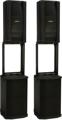
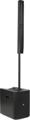
What Is a PA Speaker?
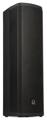
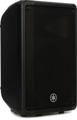
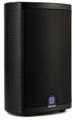
A public address (PA) speaker is a powered (active) or unpowered (passive) loudspeaker meant to amplify and direct intelligible speech, music, or other audio content to an audience. It is a vital component of a PA system, which likely includes microphones, mixers, and more. PA systems are commonly used for concert applications as well as in schools, conference halls, hospitals, retail stores (including Sweetwater!), and many other commercial settings.
PA speakers come in two basic varieties: active or passive. Active PA speakers have an integrated amplifier that powers the speaker. On the other hand, passive PA speakers require an external power amplifier to function. Generally speaking, active speakers are preferred for smaller PA systems whereas passive speakers are used for larger, more complex systems where separate amplification is preferred in consideration of issues such as heat management.
How to Choose PA Speakers
Achieving consistently high-quality live sound can be a challenge. Your choice of PA speakers can determine whether you’re mixing to make something good sound great or struggling to solve sound-reinforcement problems. There are three basic categories of PA systems:
- Personal PAs
- Medium-sized PAs
- Full-scale PAs
Personal PAs (think of those found in a small venue such as a cafe) consist of single speakers or mini speaker arrays, which serve as both main speakers and monitors. Medium-sized PAs (school auditorium or like-size venue) consist of a pair of stand-mounted speakers on either side of the stage plus simple monitor wedges. Full-scale PA systems (such as those found in a football stadium) involve multi-speaker line arrays and complex monitoring systems.
We’ve created this Sweetwater Buying Guide to provide you with the information you’ll need when you’re ready to invest in new PA speakers. Since there’s so much more to consider than what we can possibly cover here, give your Sales Engineer a call at (800) 222-4700 after checking out this guide. They can help you choose the best PA speakers for your situation.
- How Much Power Do I Need?
- Speaker Driver Configuration
- What Is a Line Array?
- An All-in-one PA Solution
- What is DSP in PA Speakers
- Bi-amplification Explained
- Do I Need a Subwoofer?
- Understanding Crossovers
- Monitor Speakers
- Powered (Active) vs. Unpowered (Passive)
- Speaker Connectors Explained
- What to Look For
How Much Power Do I Need?
There are different power-rating systems in place to determine how much power a loudspeaker can handle without sustaining damage for the purposes of properly pairing a loudspeaker with an amplifier.
Continuous power (sometimes incorrectly described as RMS power) refers to the average amount of power dissipated by the loudspeaker, often measured by using a continuous sine-wave signal. However, since PA speakers very rarely (if ever) play a continuous sine wave for an audience, this is considered a “worst case” specification.
Program power, on the other hand, is a rating based on the power of a complex waveform that simulates program material (i.e., music). The drawback of this is that there is currently no standardized practice, so it is often fruitless to compare different manufacturers’ specs.
Peak power refers to the maximum power a loudspeaker can sustain within a very short amount of time (usually measured for less than 1/10th of a second).
RMS (root mean square) is similar to average levels but not exactly the same. This value corresponds most closely to how our ears perceive sound pressure and is viewed by many as the most reliable metric to gauge a speaker’s perceived loudness over time.
Max SPL (maximum sound pressure level) is viewed by many as the most relevant spec to consider regarding how loud a speaker can get. Max SPL is measured as the maximum loudness a driver can achieve without sustaining damage. A high max SPL rating is particularly important for outdoor venues where the distance from the stage tends to be greater.
These are the most common metrics that manufacturers use to express the power of their speakers, but there are others, as well, the Electronic Industries Association (EIA) rating, for example. With all these different ways of measuring power, it can admittedly be confusing to know how much power you need for your application. If you have any questions or concerns, please consult your Sweetwater Sales Engineer at (800) 222-4700.
Speaker Driver Configuration
When choosing the perfect PA speaker for your needs, its driver configuration is another variable to consider. Why is that? Well, if your speaker only contains a single full-range driver, that driver has to cover the entire frequency range. A small speaker that’s great for high frequencies won’t reproduce low frequencies well, and a large speaker that’s good for lows won’t reproduce high frequencies well.
So, what’s the solution? Using multiple drivers. Speakers with multiple drivers do a much better job of reproducing the whole frequency spectrum. These types of speakers split the frequency range between two drivers at a minimum — a high-frequency driver and a low-frequency driver. By giving each driver a specific frequency to cover, you increase the speaker’s output, frequency range, and efficiency.
What Is a Line Array?
A line array is a vertical collection of identical speakers that have varied vertical angles to achieve uniform coverage and extended throw. A suspended (also known as “flown” or “rigged”) line array is a good way to cover large areas with excellent sound quality at high sound pressure levels. Additionally, subwoofers can be integrated to augment low frequencies. These features make them ideal for larger venues, but even medium-size venues can benefit from the enhanced audio quality and sound dispersion that a line array brings to the table. To discover whether a line array configuration would be best for you and your desired application, be sure to consult your Sweetwater Sales Engineer and visit Sweetwater.com/install.
An All-in-one PA Solution
If you’re a solo performer, then you’re probably researching PA speakers and equipment without much enthusiasm. You need to sound great whenever you perform and don’t want to invest more time, energy, and money into your system than you do into your music. There are all-in-one solutions for you that integrate a mixer, active speakers, signal processing, and even effects into a simple, compact design. For singer/songwriter types, coffeehouse gigs, and small acoustic ensembles, these PA systems can save you money, time, and space.
Shop for All-in-one PA Systems
What Is DSP in PA Speakers?
Digital signal processing, more commonly referred to as DSP, is taking real-world analog signals, converting them into digital form, and then using algorithms to enhance the audio signal in some fashion. DSP can assist in a profusion of functions across all areas of audio production. Specifically in the realm of PA speakers, DSP is commonly employed to help with time alignment between multiple units, limiting to protect the speaker(s) from damage, phase filtering, speaker positioning and orientation, and ensuring proper crossover between PA speakers and subwoofers. Many contemporary speakers come with EQ presets for certain genres or applications that are largely controlled by DSP. DSP is found in PA speakers of all sizes and price points, which attests to its utility and versatility.
Bi-amplification Explained
Within the context of a powered speaker, bi-amplification is the process of dividing an audio signal into two frequency ranges (usually high and low) that are then sent to two separate amplifiers that, in turn, drive separate loudspeakers. An active crossover network (more on this later) sends low frequencies to the amplifier for the low-frequency driver (woofer) and high frequencies to the amplifier for the high-frequency driver (tweeter). Bi-amping also allows the amplifier(s) to be chosen or designed specifically to match your speakers and enclosures. When a speaker also has DSP onboard, then the ability to maximally extract peak performance from all components can be further enhanced by utilizing advanced EQ and filter settings and dynamic range management to guard against phase and comb filtering and other, more troublesome issues. Bi-amping, tri-amping, and beyond have been used in sound-reinforcement systems for years and have become quite common in active studio monitors, as well.
Do I Need a Subwoofer?
Subwoofers are speakers that are optimized for reproducing just the lowest bass frequencies. You may not realize, though, that adding a subwoofer doesn’t necessarily make your system louder: when properly implemented, they can actually allow you to run your system at a lower overall volume while still maintaining full-range punch and impact.
Active Subwoofers
Passive Subwoofers
Subs usually focus on the 20Hz to 100Hz spectrum, which is difficult to reproduce accurately with smaller PA speakers. If a subwoofer was incorporated into a full-range speaker box, the performance of the mid- and high-frequency drivers would be compromised due to the intense vibrations of the powerful bass frequencies. Said another way, larger PA speakers can respectably reproduce low frequencies; but for true full-range sound, you need a dedicated subwoofer.
Subwoofers aren’t just for dance music and bass-heavy material. They can also play an important role in filling out the sonic spectrum for any performance. Subs also allow your main speakers to sound better, giving them valuable headroom to better reproduce the dynamics of your performance. As with full-range speakers, subwoofers can be either active or passive, each with its own pros and cons. The frequency at which the main PA speaker transitions to the sub is known as the crossover frequency.
Understanding Crossovers
Technically, a crossover is a device that divides an audio signal into separate frequency ranges that are ultimately routed to different drivers (speakers, tweeters, horns, etc.) in an audio system. For example, a 2-way crossover may comprise a lowpass filter that passes a signal with low frequencies to a woofer and a highpass filter that sends high frequencies to the tweeter. Crossovers can have passive or active designs. You don’t need to know everything about crossovers to set up a decent system, but knowing where the crossover points lie in the sonic spectrum can help you set up a better mix. A subwoofer’s crossover point is particularly important to be aware of, as it can help keep low frequencies out of your main PA speakers.
Monitor Speakers
When you’re performing, you need to be able to hear yourself. No matter what you’re doing — drumming, playing guitar, or singing — proper monitoring is imperative to a good performance. There are two primary types of stage monitors: wedges and sidefills. A wedge is essentially a speaker cabinet with an angled back so it can be placed on the stage floor. Their angled shape allows them to aim sound up toward the performer’s ears, while their low profile keeps them from blocking the audience’s view of the performers. Sidefills are larger full-range speakers that are placed to the side of the stage. They enable performers to hear a rough mix of the whole band, while wedges provide individual mixes to each performer.
When it comes to stage monitors, bigger isn’t better. Low-frequency buildup onstage is an ongoing issue, and since larger speakers produce more bass, they only contribute to the problem. As a matter of fact, monitor speakers with a narrower coverage angle and a pronounced upper midrange will do a better job of penetrating the dense sound onstage. Consequently, it’s better to have more focused stage wedges than to have fewer monitors with broader coverage and deeper lows.
Powered (Active) vs. Unpowered (Passive)
If you’re not familiar with active PA speakers, the important thing to know is that the power amplifier and crossover are built into the same cabinet as the speakers. The benefit of this is that all you will need are the speaker and a sound source, whether it be a mixer, a music player, or even your instrument in certain circumstances. Powered speakers simplify your PA system and are faster and easier to set up, but they aren’t always the best option when designing complex systems for permanent installation in large auditoriums and halls.
Passive PA speakers require separate power amplifiers and sometimes crossovers, too. For most gigging bands or small- to medium-sized venues, passive speaker systems may not be the simplest option for a sound system. But, for larger, more complex systems, it can be a huge benefit to have your system components separated. Because of the extreme amount of power required for large systems, utilizing separate amplifiers prevents your speakers from being overheated by the amps; and system maintenance in the long term is much easier when you don’t have to climb to the rafters to adjust your amplifier settings.
Because passive speakers don’t include power amps, their wattage isn’t an indicator of how powerful they are. Rather, it’s an indicator of how much power they can handle. You’ll generally find two values for power handling: their RMS (root mean square) value refers to how much continuous power the speaker can handle, while their peak value refers to the maximum power level that the speaker can handle in short bursts. Thus, if you have a speaker rated at 50 watts RMS and 150 watts peak, then it can handle 50 watts of continuous power with occasional peaks of up to 150 watts.
Shop for Unpowered PA Speakers
As you can see, choosing between active and passive PA speakers has more to do with how you’re using the system than whether one type is superior to the other. Gigging bands and small-venue owners may prefer the simplicity and reliable sound quality of active systems, while touring professionals and large installations may prefer the versatility and modular nature of a passive system.
Speaker Connectors Explained
This is one area where you won’t have to make too many tough decisions. Normally, your choice of cable connectors is determined by the connection types on your speakers. When you’re connecting a mixer’s outputs to multiple crossovers, then those to power amplifiers, and then those to speakers, you’ll most likely be using at least two different cable connector types. Because some audio equipment does give you a choice of connections, this reference guide should help you determine which cable connector type is best for your situation.
speakON is a type (and brand) of multi-pin connector that’s commonly found on speakers and amplifiers with high wattage ratings. The speakON connectors offer a very reliable connection, can handle extremely high power, and are very durable. These are used for high-power audio connections, such as from an amplifier to a speaker.
TRS is the abbreviation for “Tip-Ring-Sleeve.” This term describes 1/4″ (or 1/8″) balanced connectors. A TRS plug can be found at the end of most headphone cords if you want to know what one looks like. It looks like a standard 1/4″ plug with an extra “ring” on its shaft. TRS connectors are used wherever you need to have two conductors plus a ground (shield) in one plug.
XLR is a circular 3-pin connector with positive, negative, and ground pins. These are normally used for transmitting balanced mic-level signals to mixers or line-level signals to powered speakers.
TS is the abbreviation for “Tip-Sleeve” and refers to a specific type of 1/4″ connector that is set up for 2-conductor, unbalanced operation. The tip is generally considered the “hot,” or where the signal is applied, while the sleeve is where the ground or shield is connected. These are commonly used to connect power amps to a passive speaker.
A powerCON cable looks very much like a speakON cable, but they have drastically different uses. A powerCON cable is a lockable AC power cable whereas speakON cables are intended for audio connections. You might use a speakON cable to connect an amplifier to a speaker and a powerCON cable to connect PDUs (power distribution units) to gear such as amplifiers, active speakers, or light fixtures. Colorwise, powerCON cables are usually colored blue to denote input and gray to denote output.
What to Look For
The best way to start building a PA speaker system is to create a checklist of your needs.
How big and how many?
Without getting into the math of acoustics or the volume of air in a room, being able to generalize how much space you need to fill with sound is a great place to start. Both the volume of the room and its shape combined with the number of people in it will determine what type of speaker setup would work best. Coffeehouse and small-bar gigs obviously don’t require as much gear as you’d need for a larger club. For those larger venues, think in terms of how many seats are in the venue. For outdoor shows, room acoustics aren’t a consideration, so you’ll need to base your choice on how many people you need to reach. Remember that your audience members are all absorbing sound from the speakers: the more people who attend, the more power you need to compensate for that sound being absorbed.
Powered or unpowered?
If you’re a gigging musician and you’re managing your own sound system, we can almost guarantee you’ll be much happier with the convenience of powered speakers. If you’re running a quickly growing production company, you may prefer the flexible, modular nature of passive speaker systems. As we covered in the “Powered vs. Unpowered” section above, you should let your workflow determine which is best. If you’re not sure if one has more benefit for you, call your Sweetwater Sales Engineer at (800) 222-4700 , and we’ll be happy to discuss your situation in more detail.
How much power do I need?
If you’re using powered speakers, then you don’t have to worry about matching an amplifier to the speaker. But, if you’re using passive speakers, it’s crucial to provide them with the correct amount of power. Fortunately, you can determine this without having to do (much) math. JBL recommends that, in general sound-reinforcement situations, you use an amp that delivers equal to or up to double the IEC power rating of the loudspeaker; for example, a speaker rated at 300-watts capacity needs a 300- to 600-watt amp. Contrary to popular belief, underpowering your speakers won’t damage them — unless you are overdriving the amp. Rather, it’s clipping that damages your speakers, and lower-powered amplifiers will be driven into clipping sooner than higher-powered ones. So, if you’re using a 20-watt amplifier with 200-watt speakers, don’t crank the amp until it distorts. If you follow that rule, then you’re good to go.
Do I need a subwoofer?
As we mentioned in the subwoofer section above, any live sound situation will sound richer and more vibrant with the full-range performance you get from adding a sub to your system. But, do you really need it? Well, if your system is mainly for spoken word and a cappella singing, you can probably get away without having one. It’s the same if you’re mostly playing very small rooms. Other than some very specific situations, most performances will simply sound better with the extra bass power added by a subwoofer. If it’s not in your budget now, don’t simply buy bigger speakers to try to compensate. Plan your system and budget with the aim of adding a subwoofer in the near future, and you’ll be much happier in the long run.
Once you’ve got a general idea about what types of speakers you’ll need, please utilize the https://www.sweetwater.com/install/ page and call your Sweetwater Sales Engineer at (800) 222-4700, and we’ll help you determine what your best options are.